Market analysis
Hormuz, Round Two: The ASX Energy Short Rotation That Beat the News
ASX energy shorts rotated during the ceasefire lull. Follow the company-specific positioning as renewed Hormuz risk changed the backdrop.
 Ben Ebsworth8 min read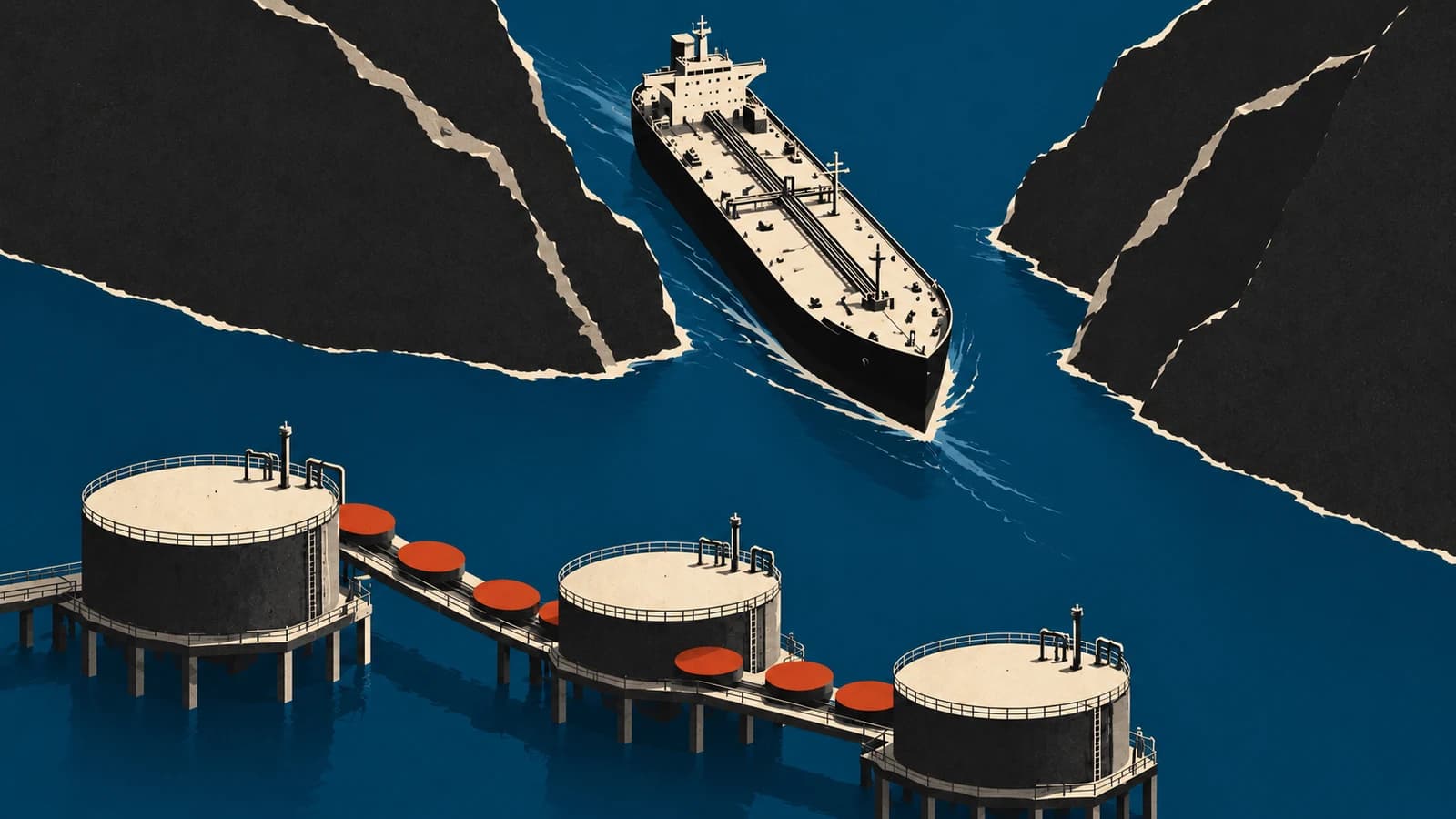
The Strait of Hormuz is back in the headlines. After a fortnight in which Brent crude slid all the way to US$70.33 — its lowest level since the war began in late February — US forces struck targets in Iran on two consecutive days this week in response to fresh attacks on tankers, Tehran retaliated against US bases across the region, and the mid-June ceasefire that was supposed to reopen the strait is, in President Trump's words, effectively over. Brent snapped back to around US$75–76, its biggest weekly gain since the truce was signed.
Two weeks ago we showed that ASX short sellers never made a macro bet against oil — they made a company-specific bet against Beach Energy while giving Woodside and Santos a pass. The follow-up question was always: what would the shorts do in the lull?
The answer is now in the data, and it's the most interesting part of the story: the positioning rotated before the news did. While the ceasefire wobbled and oil ground lower, Beach bears quietly took profits, Karoon bears reloaded for round two, and Santos short interest — the smallest on the board — nearly tripled off its floor. The tape you're reading below was set before this week's strikes. Whoever re-entered those shorts in early July is now staring at a reignited risk premium.
A quick note on the data
ASIC publishes aggregated short-position data on a T+4 basis — the latest reliable figures here run to 6 July 2026, which means every number below reflects positioning taken before this week's US strikes on Iran. That lag is exactly why the direction of travel matters more than any single day's snapshot. All figures are net short positions as a percentage of issued capital.
The rotation, in one table
Here's how short interest across the ASX energy complex moved between mid-June (around the signing of the US-Iran memorandum) and 6 July — the eve of the new escalation:
| Ticker | Company | Mid-June | 6 July | Move | Read |
|---|---|---|---|---|---|
| BPT | Beach Energy | 9.76% (17 Jun peak) | 8.60% | −1.16pp | Bears taking profits |
| KAR | Karoon Energy | 3.18% | 4.66% | +1.48pp | The reload |
| STO | Santos | 0.24% | 0.65% | +0.41pp | Tripled off the floor |
| WDS | Woodside Energy | 2.65% | 2.50% | −0.15pp | Still a non-event |
| WOR | Worley | ~2.3% | 2.21% | ≈flat | Middle East project drag priced |
| ORG | Origin Energy | ~1.5% | 1.71% | +0.2pp | Defensive, hedged |
| WHC | Whitehaven Coal | ~1.6% | 1.55% | ≈flat | Sideshow |
| VEA | Viva Energy | ~1.2% | 0.89% | −0.3pp | Refiner margin relief |
Three moves stand out. Let's take them in turn.
Beach: the bears bank it
Beach Energy remains the most-shorted conventional oil and gas name on the ASX at 8.60% — but the direction has flipped. Short interest peaked at 9.76% on 17 June, held near 8.9% through the end of the month, and has been worked steadily lower since.
That's what profit-taking looks like. The Beach short was never an oil trade — it was an operational thesis built on a production downgrade, a 67% dividend cut and soft domestic gas realisations, and it paid handsomely as the stock sat near five-year lows even while Brent traded above US$100. With the share price down more than 30% over three months, the marginal bear is now covering into weakness rather than pressing.
The risk to the remaining 8.6% is the same one we flagged in June: a crowded operational short can become squeeze fuel if the company simply stops disappointing. Beach's full-year result in August is the next scheduled test — and a sustained oil rally from here would raise the cost of being wrong.
Karoon: the reload
Karoon is the cleanest illustration anywhere on the ASX of how professional shorts trade a geopolitical cycle. Recall the first round: short interest peaked at 9.91% on 27 February — the day before the war escalated — was covered furiously into the oil spike, and bottomed near 3.1% in early June as the ceasefire came together.
Then the reload began. From 3.18% on 17 June, Karoon short interest climbed in an almost straight line — 3.41%, 3.78%, 3.97%, 4.14%, 4.52% — to 4.66% by 6 July. That's a +1.48pp re-entry in three weeks, timed against Brent's slide toward US$70 as peace talks in Doha appeared to progress.
The logic is straightforward: Karoon is the purest oil-price beta on the ASX, so if you believe a reopened Hormuz takes Brent back to the mid-US$60s, Karoon is where you express it. But the same beta cuts the other way. Those shorts were built for a de-escalation that has just violently reversed — if the strait stays contested, round two of the Karoon short could end the way round one did: covered at a loss into a spike.
Santos: watch the floor
Santos was our "quality pass" case study in June — the least-shorted major energy name in the country at a near-trivial 0.24% on 17 June. It's still tiny. But it has now nearly tripled to 0.65% in three weeks, rising every single reporting day since 25 June.
In absolute terms this is noise — two-thirds of one percent of issued capital. What makes it worth watching is the direction change at the extreme. Santos shorts spent the entire war grinding toward zero; the sudden accumulation as oil fell back to pre-war levels suggests some funds started positioning for energy earnings downgrades in a US$70 world — Barossa LNG ramp-up or not. If that's the thesis, this week just complicated it.
Woodside: still nothing to see
Woodside remains the dog that didn't bark: 2.50% shorted and drifting lower through the entire round trip. Long-term Asian LNG contracts, cargoes that don't transit Hormuz, and a record production base continue to make it a poor target — the market treats WDS as the defensive way to hold Australian energy through the chaos, and the short tape agrees.
Where the energy shorts actually live
One thing hasn't changed since June: the biggest bearish energy bets on the ASX still aren't about oil at all. They're about the nuclear fuel cycle:
| Ticker | Company | Short interest |
|---|---|---|
| LOT | Lotus Resources | 22.81% — the most shorted stock on the entire ASX |
| BOE | Boss Energy | 11.77% |
| PDN | Paladin Energy | 11.39% |
| DYL | Deep Yellow | 8.60% |
Uranium developers carry double-digit short interest that dwarfs anything in conventional oil and gas — a crowded bet on soft spot uranium and difficult production ramps. Beach, at 8.60%, is the only conventional energy name that even sits in their neighbourhood. For the full picture, the most shorted list and industry breakdown update daily.
What to watch from here
- The strait itself. Tanker transits had been recovering — MarineTraffic data showed daily crossings roughly doubling in the week after the truce — before this week's attacks knocked traffic back below normal. Transit counts are the single best real-time indicator of whether the risk premium builds or fades.
- 17 July. The US Treasury's authorisation for purchases of Iranian oil expires at 12:01am EDT on 17 July. If it lapses without a deal, more than a million barrels a day of supply goes back into limbo.
- The 60-day window. The truce framework signed in mid-June runs to roughly mid-August. Qatari mediation is reportedly keeping negotiations alive despite this week's strikes — a formal collapse would re-arm the full macro trade.
- Beach's August result. The remaining 8.6% short is an operational bet with a hard catalyst date. Stabilised production guidance would put a crowded position under pressure.
- The T+4 tape. None of this week's escalation is visible in the short data yet — the next few daily reports will show whether the Karoon reload held its nerve or covered into the spike. The direction of travel, week over week, is the signal.
The June lesson still holds: a giant macro shock doesn't automatically produce a giant macro short. But the July addendum is just as useful — the short tape often front-runs the headlines. The rotation into Karoon and out of Beach happened while the news flow was all ceasefire and reopening. Four days of ASIC lag notwithstanding, positioning told you the pros never believed the war was over.
Track ASX energy shorts on Shorted
Follow every name in this article live — short-interest trajectories, price action, and how positioning shifts as round two unfolds:
- Beach Energy (BPT) · Karoon Energy (KAR) · Santos (STO) · Woodside (WDS)
- The uranium cluster: Lotus (LOT) · Boss (BOE) · Paladin (PDN) · Deep Yellow (DYL)
- Or screen the whole sector on the ASX short interest screener →
This content is for informational purposes only and does not constitute financial advice. Short-position figures are derived from ASIC data published on a T+4 basis and were accurate as at 6 July 2026; oil prices and the conflict status were moving rapidly at the time of writing. Always conduct your own research before making investment decisions.